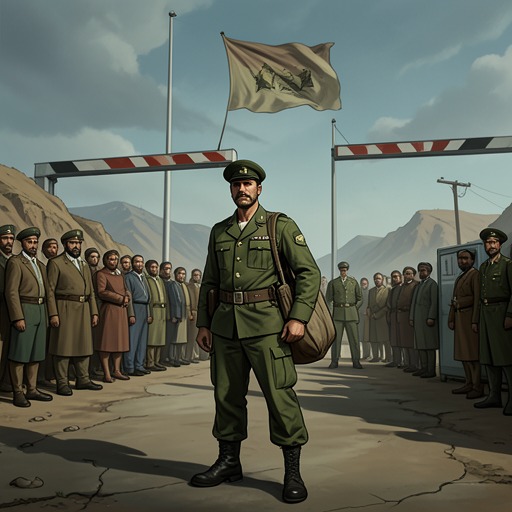
Mauritanian coup of 2005
Guantanamo DiaryThe Mauritanian coup of 2005 brought an end to Maaouya Ould Sid’Ahmed Taya’s long tenure as Mauritania’s ruler. In the account surrounding Mohamedou Ould Slahi’s detention, the coup marks the political endpoint of a period in which the government faced mounting criticism for its human-rights record and its cooperation with U.S. counterterrorism policy.
Background and Political Pressure
Ould Taya came to power in a military coup in 1984 and became president in 1992. During his rule, his government carried out several waves of arrests of political opponents and Islamists. In one such crackdown, more than ninety people—including a former government minister and ten religious leaders—were arrested, publicly confessed to belonging to illegal organizations, and were later amnestied.
The government also pursued Islamists in the army and education system. That campaign preceded a failed coup attempt in 2003. The account establishes this sequence but does not specify that the failed attempt directly caused the later overthrow.
U.S. Cooperation and Public Support
Ould Taya’s close cooperation with the United States’ antiterrorism policies drew criticism both internationally and within Mauritania. That cooperation included allowing Slahi’s rendition. In 2002, when Slahi was secretly held in Jordan, few people knew about the U.S. rendition, detention, and interrogation program or the cooperation it received from Mauritania and other partners. The account places Slahi’s transfer within the wider security relationship, rather than presenting it as the sole cause of political opposition to Ould Taya.
By the time of the 2005 coup, Ould Taya had lost much of his public support. The account attributes that loss in part to his support for U.S. antiterrorism policies and in part to his aggressive campaign against Islamists. It thus connects the government’s domestic repression and foreign security alignment to its worsening political standing, without reducing the coup to a single grievance.
Overthrow and Significance
In 2005, a successful coup deposed Ould Taya. The account gives no further details about the coup’s participants, its immediate course, or the arrangements that followed, so its significance here lies chiefly in the change of regime after decades of rule and sustained political pressure.
The coup also frames Slahi’s story within Mauritania’s political climate: cooperation with the United States facilitated his transfer into secret detention, while that same policy contributed to the ruler’s declining public support. The episode links an individual’s cross-border detention to the contested domestic politics of the government that permitted it.